Quick answer
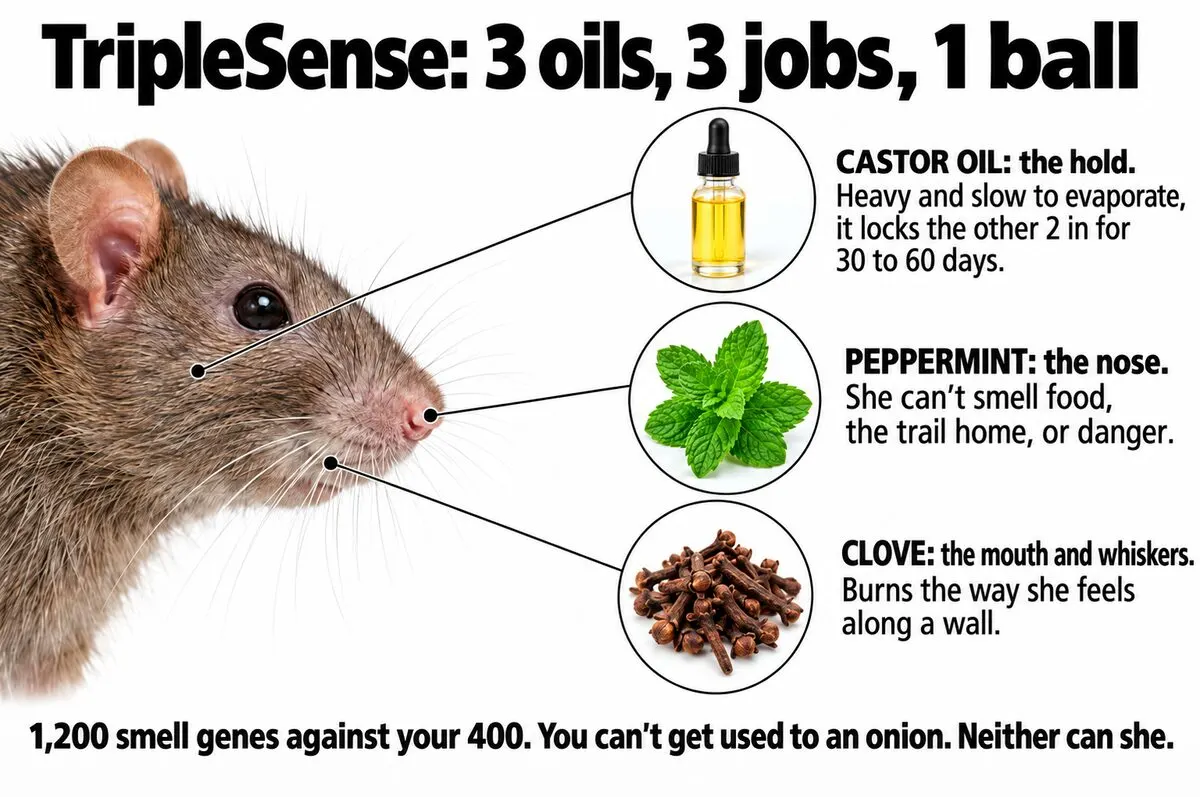
MintGuard contains peppermint, clove and castor oil in solid balls designed for slow scent release. Peppermint supplies the main scent, clove adds a second scent and castor oil acts as the slow-release carrier. Each pack contains 12 balls and each ball lasts 30 to 60 days. There is no poison, no trap and nothing to plug in. However, natural does not mean harmless, and evidence on scent as a rodent deterrent is mixed. This explanation is written by the MintGuard team, the makers, rather than an independent laboratory.
| Peppermint oil | Main scent |
|---|---|
| Clove oil | Sharp second scent |
| Castor oil | Slow-release carrier |
| Poison | None |
Signs to look for
- Before choosing a scent product, look for fresh droppings, gnawing and damaged packaging. These help identify activity, although they do not reveal how many rodents are present.
- Check for food and shelter opportunities around the affected area. Accessible animal feed, overflowing bins and gaps around services may matter more than the scent you choose.
- If signs persist after changes, investigate rather than interpreting the remaining fragrance as evidence that protection is in place. Keep a dated record for a professional assessment.
Why the blend has three oils
Peppermint gives the product its recognisable mint scent. Clove contributes a different, sharper note, while castor oil forms part of the slow-release approach. Those are ingredient roles, not proof that the combination will repel every mouse or rat. The intended use is scent-based deterrence alongside sensible housekeeping and proofing.
We do not publish ingredient percentages, a complete formulation specification or laboratory performance results on this page. Do not infer those details from the order of the ingredient names. If you need more information because of an allergy, a workplace requirement or an animal health concern, contact the official shop before using the product rather than guessing about the formulation.
What slow release means in practice
The oils are supplied in solid balls rather than as a bottle for dripping around the house. Each ball lasts 30 to 60 days, with conditions affecting use. This avoids the need to repeatedly apply loose oil, but it does not make the product a physical barrier, remove an infestation or guarantee protection for a set floor area.
Evidence on scent is mixed. A rodent seeking food or shelter may continue to enter a scented area, and a strong smell to a person is not a reliable measure of deterrence. Use fresh signs and an inspection of entry points to guide decisions. Do not wait for the stated life to end if new damage or contamination appears.
Use the ingredients in their supplied form
- 1Read the pack directions and identify positions where balls cannot be touched, swallowed or carried away by children or animals. If there is no safe position, choose another approach.
- 2Keep whole balls away from food, worktops, pet bowls and bedding. Avoid heat sources, machinery and electrical equipment; follow any surface or placement precautions on the label.
- 3Record placement dates, store unused balls as directed and replace each after 30 to 60 days according to the instructions. Do not refresh them with household essential oils or other mixtures.
Natural ingredients still need care
No poison means MintGuard is not a poison bait; it does not mean the balls are edible or safe for unrestricted contact. Keep them away from children and animals, avoid contact with eyes and follow the supplied handling directions. Do not crush them, add oils, burn them or use them for any purpose other than the labelled one.
PDSA warns about risks associated with essential oils and cats. That guidance does not independently certify this product as safe or unsafe for a particular household. It is a reason to use caution and ask your vet about your animal's circumstances. If a child or animal may have swallowed or contacted the product, seek appropriate medical or veterinary advice promptly and retain the packaging.
Proofing checklist
- Reduce entry opportunities around doors, service pipes and damaged building fabric. Choose appropriate durable materials, preserve required ventilation and use qualified help for awkward repairs.
- Store food and feed in closed, robust containers. Clean spills and keep waste secure, because a scent blend does not take away an accessible source of food.
- Inspect nearby sheds and garages as part of the same plan. Ask for advice before sealing suspected active access points so that animals are not trapped inside.
| Option | Price | Contents |
|---|---|---|
| 1 pack | £39 | 12 balls |
| 2 packs | £69 | 24 balls |
| 3 packs | £89 | 36 balls |
| 4 packs | £109 | 48 balls; £27.25 per pack |
Mistakes to avoid
- Assuming that three oils prove greater effectiveness than one. Ingredient variety alone is not a comparative test, and this page makes no claim of independently proven superiority.
- Calling a product pet-safe solely because it contains no poison. Exposure, species, individual health and the ability to prevent contact all matter.
- Making a homemade copy from concentrated oils. This page is not a mixing recipe, and substituting ingredients or changing concentration creates different handling and exposure risks.
Right for you if…
- People seeking a non-powered scent option who understand the limits of ingredient-based claims and can use it as part of a broader prevention plan.
- Householders with suitable inaccessible placement points and no unresolved concerns about fragrance exposure.
Not right if…
- Anyone seeking an edible, contact-safe or universally pet-safe product; those descriptions do not follow from natural ingredients.
- People needing an immediate solution to established activity, or a product with independently demonstrated results supplied on this page.
When to call a professional
- Contact a pest professional when signs continue, activity is widespread or rats are suspected indoors. Scent ingredients should not distract from identifying the species and access routes.
- For possible swallowing or significant exposure, seek medical or veterinary advice promptly rather than treating it as a pest-control question. Keep the packaging available and follow professional instructions.
Check the product before choosing a scent approach
Visit mintguard.co.uk for official MintGuard packs, secure checkout, tracked UK delivery and a 90-day money-back guarantee. Ask about any ingredient concerns before ordering, and read the current guarantee terms.
From £27.25 a pack · 90-day money-back · Tracked UK delivery
Try it risk-free for 90 days
If MintGuard doesn't help, the official shop refunds you. You get tracked UK delivery and secure Shopify checkout. How to check you're buying the real thing.
Common questions
What are the MintGuard ingredients?
The named oils are peppermint, clove and castor oil, supplied in a solid, slow-release format. This page does not provide ingredient percentages or a full technical formulation specification.
What does castor oil do?
Castor oil is the slow-release carrier in the blend. That describes its intended formulation role, not a claim that castor oil alone will control rodents in a building.
Does MintGuard contain poison?
No. MintGuard contains no poison and is not a poison bait. It still needs careful handling and must not be swallowed or left where children or animals can reach it.
Is peppermint enough to stop rats or mice?
There is no dependable scent-only guarantee. Evidence on scent is mixed, and rodents may tolerate smells when food or shelter is available. Proofing and removing attractants remain important.
Is it safe for cats?
Do not assume that it is safe in every cat household. Essential oils can pose risks to cats. Prevent access, avoid resting and feeding areas, and ask your vet if unsure about using it.
Can I add extra peppermint oil?
No: use the product in its supplied form and follow the pack instructions. Adding oils changes the mixture and exposure, and is not an appropriate way to extend a ball's useful life.
Will the smell bother people?
People vary in their tolerance of fragrances. Do not assume everyone will find the mint and clove scent pleasant. If strong scents are a concern, ask for product guidance before buying and consider a non-scent approach.
How long do the ingredients keep releasing scent?
Each ball lasts 30 to 60 days. Follow the replacement and storage guidance on the pack, but respond to fresh rodent signs immediately rather than treating that lifespan as guaranteed protection.