Prevention
Mouse deterrents: keep them from coming back
By the MintGuard team · Updated 26 October 2026 · Who we are
Quick answer
A mouse deterrent plan aims to make your home harder to enter and less rewarding to explore. Prioritise secure food storage, suitable gap repairs and regular checks, especially before autumn. Scent is optional: evidence is mixed and it works best as an extra measure alongside proofing and while kept fresh. We are the MintGuard team, so we explain our product as makers rather than independent reviewers.
Signs to look for
- Fresh food damage or new droppings after a quiet period mean the prevention plan needs review. Note the date and location instead of just cleaning and forgetting.
- A draught beneath a damaged external door or a newly opened service gap can signal a vulnerability even before there is visible animal activity.
- Disturbed storage is not proof of mice on its own. Combine observations and seek identification where the cause remains uncertain.
Mouse deterrent before winter: inspect while access is easy
Prevention is easier to organise before the first worrying noise at night. Choose a dry day to inspect outside doors and accessible service entries. Indoors, look behind stored items and inside the under-sink cupboard without dismantling appliances. Write a short repair list with photographs so a small defect does not disappear from memory.
Autumn is a useful reminder, not the only season when mice can enter a building. A newly fitted cable, damaged door seal or change to an adjoining property can create access at any time. Add a quick inspection after building work and before bringing garden cushions, seed or pet supplies indoors for storage.
How to stop mice coming back after treatment
If you have recently had pest control, ask which routes were identified and which repairs are still outstanding. Keep the written recommendations. The end of treatment is not the same as a fully proofed home, and putting scent where traps once stood does not complete a missing repair.
Agree who is responsible for each job. A landlord, managing agent or tradesperson may need to deal with a shared door or inaccessible service gap. Record when work is completed, then keep checking for new activity. One quiet evening does not demonstrate permanent exclusion, just as one old dropping does not prove that treatment failed.
Natural mouse deterrents alongside everyday routines
Put pet food away when feeding is finished and clear spillages around bowls. Store bird seed securely rather than in a thin sack on the garage floor. Check cupboard corners and the sides of appliances during normal cleaning. Small regular tasks are easier to sustain than a deep clean triggered by panic.
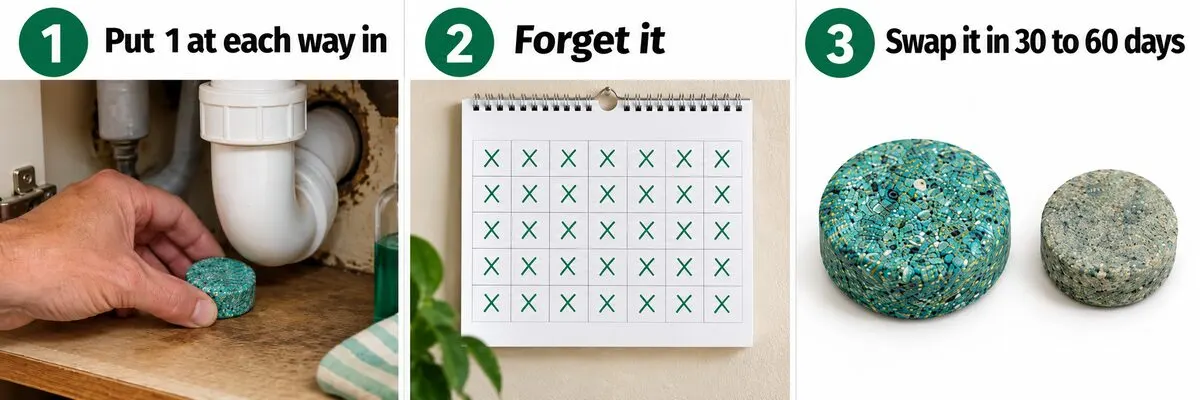
A peppermint-based product may fit this routine if you want an additional scent measure. MintGuard has 12 solid balls per pack, made with peppermint, clove and castor oils for slow release. Each lasts 30 to 60 days. There is no poison, no trap and no need for a socket, but you still need to monitor the property.
Add scent to an existing prevention routine
- 1Finish the accessible inspection and prioritise repairs first. If there is current activity, ask about animals inside before permanently sealing suspected routes.
- 2Select label-approved, inaccessible-to-children-and-pets positions beside relevant routes. Keep balls separate from food, bowls and bedding, not in a general household fragrance location.
- 3Record every position and the installation date. Review during the 30-to-60-day product life, check for new signs and remove or replace balls according to the label.
Build a mouse prevention calendar you can maintain
Keep a note on your phone with three headings: repairs, new signs and product checks. Put replacement dates beside any scent locations rather than depending on whether you notice the smell. Household members can become used to a fragrance, and smell strength is not a dependable test of whether mice are present.
Review after deliveries of animal feed, a spell away from home or work around external walls. If fresh signs return, stop treating this as routine prevention and investigate the active problem. Buying another pack without checking what changed can put off the repair or treatment that would actually resolve the route.
Mouse deterrent costs: prevention is more than refills
MintGuard is £39 for one pack, £69 for two, £89 for three or £109 for four; the last option is £27.25 per pack. Do not buy a bundle instead of a needed door repair. Materials can last beyond one winter, whereas scent products require review and replacement.
Proofing checklist
- Fit an appropriate door seal to a defective external door while preserving safe operation and any required ventilation. Check the fit rather than assuming a brush strip always closes every gap.
- Use appropriate rodent-resistant repairs around pipes and cables. Where a service needs movement, heat clearance or maintenance access, ask a competent tradesperson.
- Use suitable mesh for vulnerable openings without blocking air bricks or vents. In a roof space, check for possible protected wildlife before altering access.
| Option | Indicative four-month budget | What to allow for |
|---|---|---|
| MintGuard, 12 balls deployed at a time | £69 for two packs to £109 for four packs | The example assumes 12 balls in use together, not that every home needs 12 placements. Two complete sets cover about 120 days only if each lasts 60 days; four sets are needed at 30 days. Individual balls last 30 to 60 days. |
| DIY scent supplies | Typically around £5–£15 per bottle | Repeat purchases depend on bottle size, placement and refresh frequency. This is not a four-month performance guarantee. |
| Ultrasonic unit | Typically around £10–£30 per unit, plus electricity | More than one room may need separate units. Buying hardware does not establish that it will control activity. |
| Basic proofing materials | Typically around £10–£40 for small DIY jobs | A one-off materials allowance, not labour, drainage repairs or a whole-house quotation. |
Mistakes to avoid
- Treating September as a deadline after which prevention is pointless. Repairs and food control are useful throughout the year, including after a winter problem starts.
- Buying a deterrent but leaving stored seed, crumbs and damaged packaging untouched. A prevention product does not cancel an easy meal.
Right for you if…
- Homes after successful treatment, households preparing for winter and people willing to combine a scent product with a simple inspection calendar.
Not right if…
- An active infestation needing clearance, a replacement for unfinished repairs, or a guarantee that mice will never return.
When to call a professional
- New signs continue after simple repairs, or you cannot safely inspect the suspected route. Get advice rather than repeatedly changing scents.
- Activity returns after treatment and the entry route was never identified. Ask for a review of the building and any shared access rather than assuming product resistance.
Make prevention a routine, not a panic purchase
If scent fits your mouse-deterrent checklist, see MintGuard at mintguard.co.uk. You get tracked UK delivery, secure Shopify checkout and a 90-day money-back guarantee, alongside the need for repairs and regular checks.
From £27.25 a pack · 90-day money-back · Tracked UK delivery
Try it risk-free for 90 days
If MintGuard doesn't help, the official shop refunds you. You get tracked UK delivery and secure Shopify checkout. How to check you're buying the real thing.
Common questions
What is the best mouse deterrent?
Start with suitable proofing and removing access to food. No scent has a dependable claim to being best for every household; it is an optional extra rather than the foundation.
How do I stop mice coming back?
Complete outstanding repairs after control, store food securely and monitor for fresh signs. If activity returns, investigate the route rather than relying on a repeat purchase.
When should I put mouse deterrent down?
If you choose scent, use it according to the label as part of a year-round plan. Autumn is a useful inspection reminder, but do not wait if signs appear earlier.
Do mouse deterrents harm mice?
A scent product is intended to discourage rather than catch animals. That does not make every possible exposure harmless, so handle and place the product carefully.
Can I use peppermint instead of sealing holes?
No. A scent does not create a physical barrier and may not overcome access to food and shelter. Evidence is mixed, so keep proofing at the centre of the plan.
Will a cat keep mice away?
Do not depend on a pet as your prevention system. Maintain food storage, repairs and checks, and avoid putting any pest-control product where the cat can reach it.