Buying guide
Rodent repellent for mice and rats
By the MintGuard team · Updated 26 October 2026 · Who we are
Quick answer
A rodent repellent may be marketed for both mice and rats, but one product does not make the two problems identical. Identify the animal, find its access route and deal with food and shelter. Evidence for scent deterrents is mixed, so use them only alongside proofing and fresh-activity checks. We are the MintGuard team and make the scent balls described below; this is not an independent product ranking.
Signs to look for
- Separate fresh damage from old marks by taking dated photographs from a safe distance. Do not assume every sign found during a clear-out is current.
- Record whether evidence is limited to stored food, follows a wall edge or appears near an external structure. This helps focus inspection without claiming a certain species.
- If there are noises but no visible signs, avoid opening wall cavities yourself. Ask for identification before applying treatment intended for a particular animal.
Rodent repellent for mice and rats: identify what is visiting
Rodent is a broad word, not a diagnosis. A noise in the ceiling could be a mouse, rat, squirrel or something else. Dropping size and gnawing patterns can provide clues, but photographs and a professional inspection are more useful than guessing from a sound heard through plasterboard. Do not pick up droppings to compare them.
The distinction changes the next step. A small gap around a kitchen pipe may matter for mice, while repeated rat access can justify looking at external structures or drains. If squirrels or a protected species might be involved, do not assume a mice-and-rats product or trapping method is appropriate. GOV.UK explains restrictions on wildlife control and protected habitats.
One rodent deterrent does not mean one placement pattern
Walk the property by zone: kitchen, utility room, garage and loft access. Write down where fresh signs occur and where food is available. You may have old evidence in one space and current activity in another. Treating every room equally can waste money while missing the entry route that matters.
A repellent beside a garage door cannot be assumed to protect a kitchen cupboard on the other side of the house. Nor does using twice as much establish better control. Placement must follow the label, safe access and the actual route. There is no honest universal balls-per-house figure that accounts for every building and infestation.
What a mixed mouse-and-rat prevention plan includes
Start with secure food and feed storage, reliable bin lids and repairs to doors and service penetrations. Keep clutter manageable so you can inspect wall edges and stored materials. Where animals are already inside, ask about the order of treatment and permanent sealing rather than immediately closing every opening you can find.
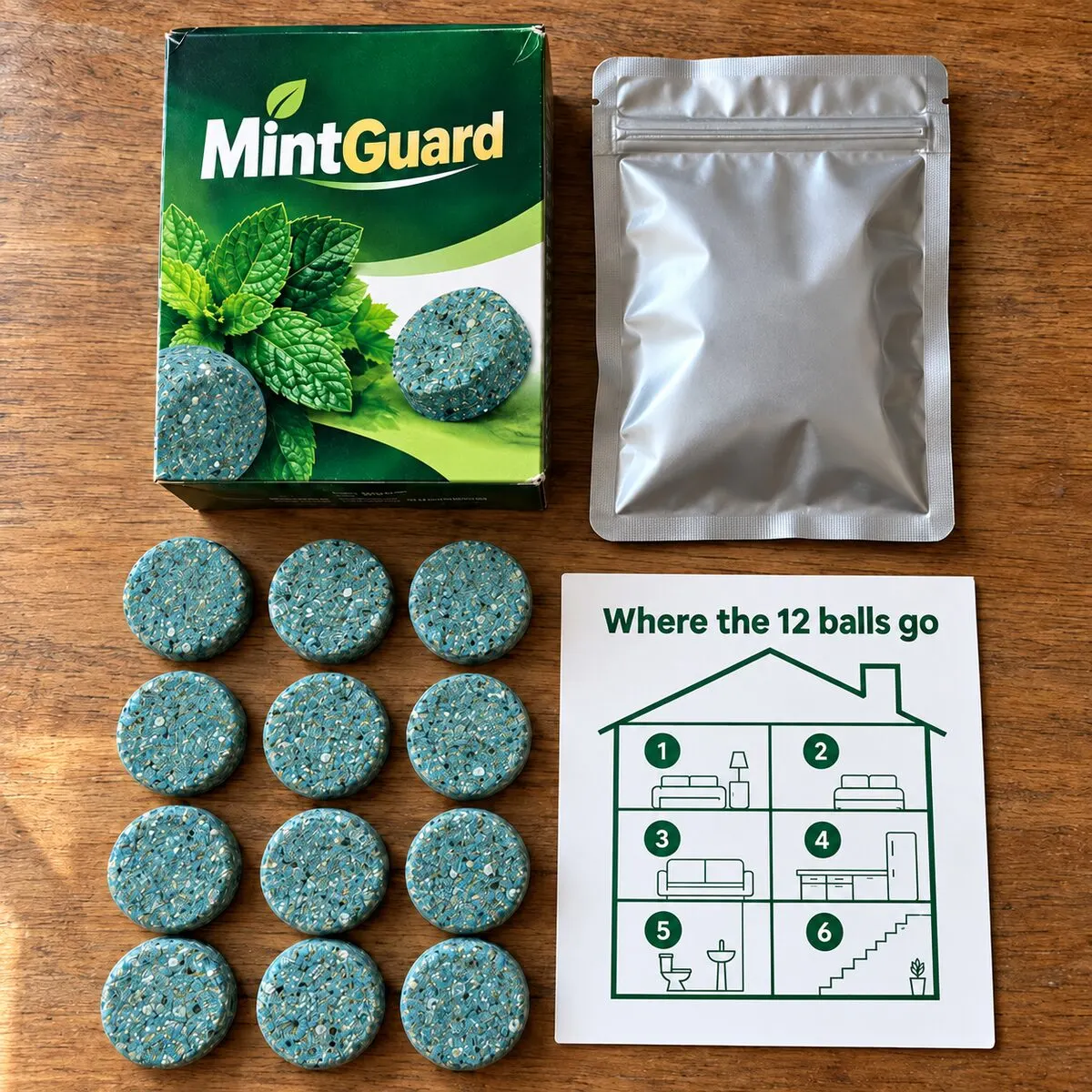
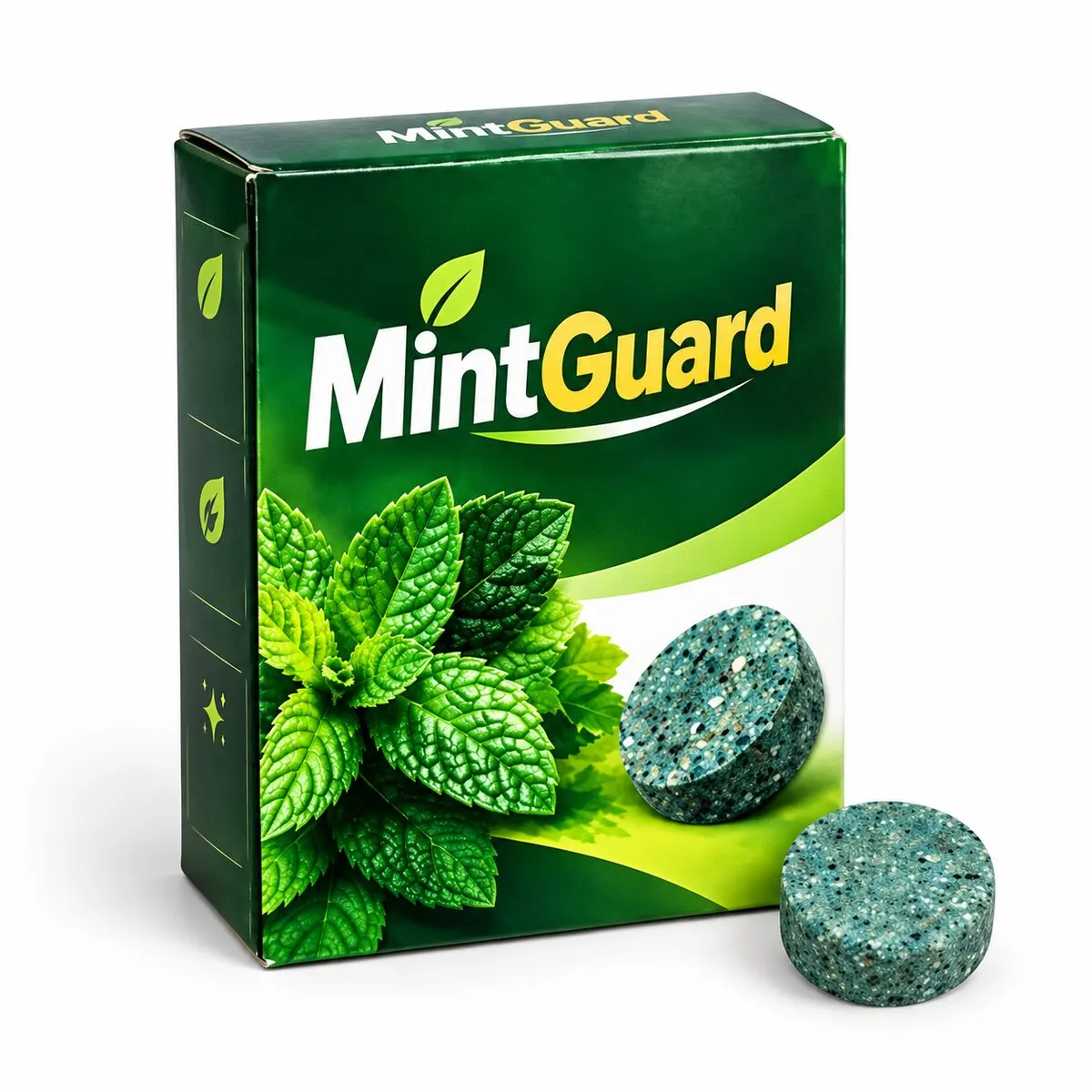
Then decide whether an additional scent product is useful. MintGuard supplies 12 solid balls per pack with peppermint oil, clove oil and castor oil for slow release. Each lasts 30 to 60 days. There is no poison, no trapping mechanism and no plug, but those features do not establish successful exclusion or clearance.
Map a multi-space rodent prevention plan
- 1List each affected zone and inspect safe, accessible entry points. Keep the loft off the list if reaching it would mean stepping on unsupported ceilings.
- 2Place scent only where the label allows and where children and pets cannot reach it. Keep a location record so no ball is forgotten when storage is moved.
- 3Date each deployment and track fresh evidence separately for every zone. Renew within the stated 30-to-60-day life if appropriate, and investigate continued activity rather than extending the trial indefinitely.
Comparing rodent repellents without misleading coverage claims
Compare the job, not just the pack price. A DIY oil bottle needs a suitable application method and repeated attention. An ultrasonic unit needs power and a layout it can realistically reach; walls and enclosed storage complicate that. A physical repair tackles access directly but may need a tradesperson rather than a shopping basket.
Be wary of a promise that a single item covers an entire house, every species or an exact floor area in all conditions. Ask what evidence supports the claim and whether the seller explains failure conditions. We do not describe peppermint as scientifically proven to clear infestations. Mixed evidence means monitoring and fallback options are part of an honest buying decision.
Price a rodent plan by simultaneous placements
MintGuard pack prices are £39 for one, £69 for two, £89 for three and £109 for four, equivalent to £27.25 per pack in the largest bundle. A second building may need extra placements at the same time, rather than simply another replacement later. Budget from your safe-position list.
Proofing checklist
- Choose materials suitable for the size and construction of each gap. Mesh, metal and an appropriate durable finish may be needed rather than foam alone.
- Keep ventilation open and retain access to service points. A blocked vent can create a different household problem even if it closes an animal route.
- Coordinate repairs across attached garages and shared areas. Separate households may need one agreed access plan, especially where drainage or party-wall voids are involved.
| Option | Indicative four-month budget | What to allow for |
|---|---|---|
| MintGuard, 12 balls deployed at a time | £69 for two packs to £109 for four packs | This illustration uses 12 balls simultaneously; covering more separate locations increases the number of sets required. Two complete sets cover about 120 days only if each lasts 60 days; four sets are needed at 30 days. Individual balls last 30 to 60 days. |
| DIY scent supplies | Typically around £5–£15 per bottle | Repeat purchases depend on bottle size, placement and refresh frequency. This is not a four-month performance guarantee. |
| Ultrasonic unit | Typically around £10–£30 per unit, plus electricity | More than one room may need separate units. Buying hardware does not establish that it will control activity. |
| Basic proofing materials | Typically around £10–£40 for small DIY jobs | A one-off materials allowance, not labour, drainage repairs or a whole-house quotation. |
Mistakes to avoid
- Calling any loft animal a rodent and treating without identification. Protected species need specialist advice, and some animals cannot lawfully be released after capture.
- Assuming no poison means no precautions. Oils and solid balls still need safe storage; seek veterinary advice immediately if a pet may have swallowed a product.
Right for you if…
- Households making a coordinated prevention plan for several spaces and wanting an optional socket-free scent product.
Not right if…
- Unidentified wildlife, squirrel treatment, guaranteed whole-house clearance or households unable to keep scent products securely away from pets.
When to call a professional
- You cannot identify the animal, evidence appears across several rooms, or rats may be using structural routes. Ask what the inspection includes before agreeing treatment.
- Chewed wiring, a possible protected animal or extensive contamination makes DIY experimentation inappropriate. Involve the relevant specialist as well as arranging pest advice.
Choose by route, not by a whole-house promise
Explore MintGuard at mintguard.co.uk if an additional scent measure suits your mapped prevention plan. Orders have tracked UK delivery, secure Shopify checkout and a 90-day money-back guarantee.
From £27.25 a pack · 90-day money-back · Tracked UK delivery
Official MintGuard prices
As listed on mintguard.co.uk. If the price changes, the shop's price applies.
1 pack · 12 balls
£39.00 per pack
£39
£782 packs · 24 ballsMost popular
£34.50 per pack
£69
£1563 packs · 36 balls
£29.67 per pack
£89
£2344 packs · 48 ballsBest value
£27.25 per pack
£109
£312
Common questions
Does rodent repellent work for mice and rats?
A product can be intended for both, but reliable control still depends on the animal, route and conditions. Scent evidence is mixed and does not justify a blanket success claim.
What is the difference between mouse and rat repellent?
The ingredients can overlap. The important differences are the actual species, where it is travelling and what control or repairs the property needs.
How many MintGuard balls do I need?
There are 12 per pack. Follow the label and map suitable positions rather than assuming one pack protects every home. More rooms and outbuildings can mean more simultaneous placements.
Does rodent repellent work on squirrels?
Do not assume it does. MintGuard is discussed here for mice and rats. Squirrels need correct identification and species-appropriate professional advice, including any legal restrictions.
Can I use rodent repellent around pets?
Only with careful placement consistent with the label. No poison is not a universal pet-safety claim, and essential-oil products should not be accessible to chewing animals.
Is a repellent better than professional pest control?
They do different jobs. A repellent is an optional deterrent; professional help can identify animals, address established activity and advise on lawful control and lasting proofing.
Only buy MintGuard from mintguard.co.uk
Copycat sites and look-alike listings use our photos. They aren't covered by the 90-day money-back guarantee. How to spot a fake