Quick answer
Peppermint oil is not a reliable way to clear rats from a home. Evidence for scent deterrents is mixed, and a strong smell does not remove food, shelter or access. If you choose a labelled scent product, treat it as an optional extra alongside proofing and keeping it fresh, not a substitute for dealing with an infestation.
Signs to look for
- Look for newly appearing droppings, damaged food containers or repeated sightings. Photograph evidence from a safe distance so a pest controller can assess it.
- A smell disappearing is not the same as rats disappearing. Record fresh activity in the same places rather than judging success by how minty a room feels.
Does peppermint oil repel rats?
The useful question is not whether a rat notices peppermint. It is whether a particular product keeps rats away from your particular building. Those are different things. We cannot promise that peppermint oil will make established rats leave, and we do not have product-specific independent evidence showing that MintGuard clears infestations.
A rat visiting an empty outbuilding is a different problem from rats nesting beneath a kitchen floor. In the second situation, reliable access to food and shelter may outweigh an unfamiliar smell. Do not wait for a stronger aroma to solve repeated activity. Find the route and arrange appropriate control.
How to use peppermint oil for rats without creating another problem
Avoid internet recipes telling you to soak loose cotton wool in neat oil and scatter it everywhere. That creates accessible material which children or pets could touch, chew or move. There is no universal number of drops, dilution or replacement schedule that we can recommend as a proven rat treatment.
If using a formulated product, read its label before buying and follow its placement instructions. Choose a location that is genuinely inaccessible to children and animals, away from food and food-contact surfaces. Do not put scented material inside vents, onto hot equipment or beside wiring simply because you suspect rats pass there.
Peppermint oil for rats in lofts, sheds and gardens
A loft can hide a route along a pipe opening or damaged roof edge. A scent placed beside the hatch does not inspect that route or establish which animal is present. Avoid walking between joists or disturbing insulation to distribute repellent. Scratching overhead can have other causes, including protected wildlife.
In a shed, start with spilled seed, pet feed, damaged doors and clutter against walls. Outdoors, exposed scent is difficult to manage and is not a boundary fence. Address open compost access, feed stores and overflowing bins before spending money trying to perfume a garden.
A cautious peppermint-product placement plan
- 1Inspect accessible areas in daylight and identify food, water and likely access before choosing any repellent position. Do not reach into concealed spaces.
- 2Read the label and decide whether you can keep every ball or other scented item inaccessible to children and animals throughout use. If not, skip scent.
- 3Use only appropriate accessible locations permitted by the instructions. Keep a note of placement dates and inspect for movement, damage or continued activity.
- 4Review the evidence promptly. Repeated fresh signs require a control plan, not simply another layer of oil. Keep proofing work coordinated with safe removal of animals already inside.
Is peppermint oil safe around cats and dogs?
Natural does not mean harmless. PDSA specifically lists peppermint and clove among oils toxic to cats. It describes exposure through swallowing, skin contact and inhalation, with greater concern in some circumstances such as neat-oil diffusers and cats with asthma. That advice is a reason for care, not proof that every formulated product has the same risk.
Never apply repellent to an animal or its bedding. Ask your vet about the actual formulation if pets share the space, especially small pets or animals with breathing problems. If a cat may have contacted or swallowed essential oil, contact a vet promptly even if it seems well. Keep the packaging available.
Peppermint spray, DIY oil or slow-release balls?
A spray needs consideration of where droplets land. Loose oil also brings spill risks and can mark finishes. A solid format avoids handling an open puddle, but it must still be protected from chewing and used as directed. None of these formats turns scent into a proven infestation treatment.
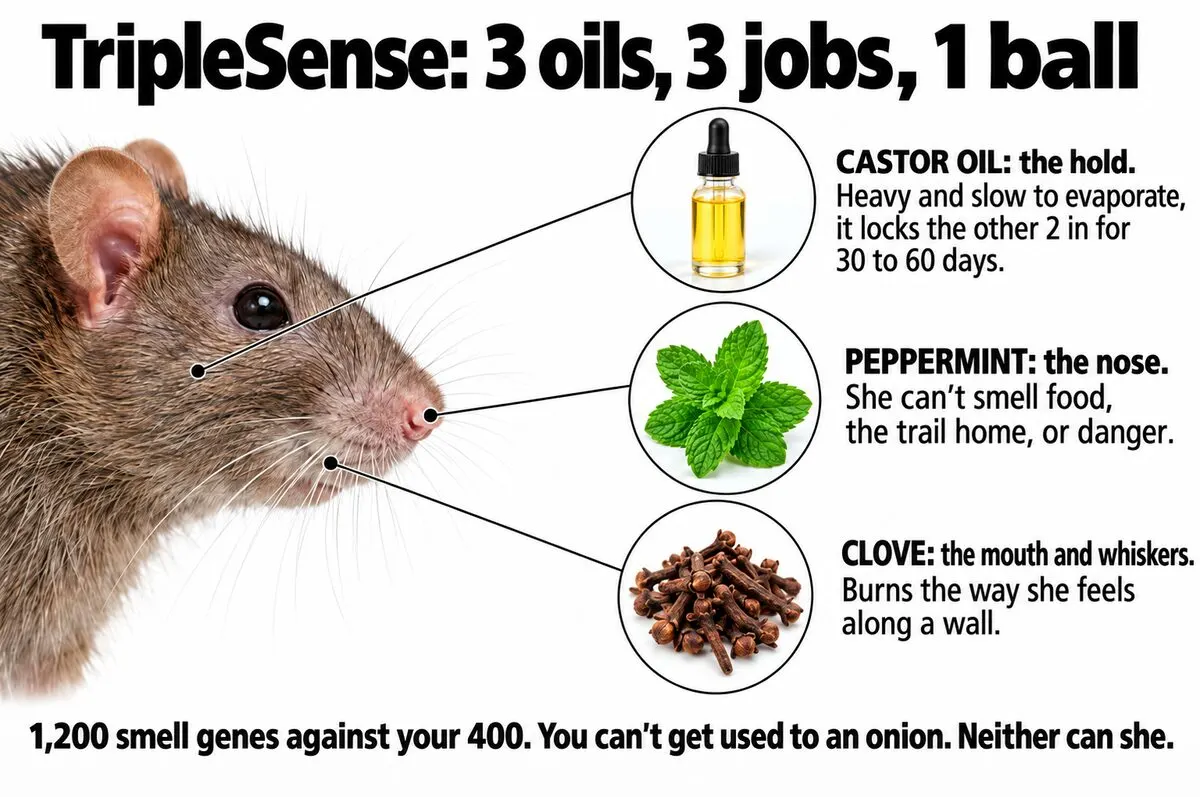
We are the MintGuard team, the makers of the product discussed here. MintGuard contains peppermint oil, clove oil and castor oil in 12 solid slow-release balls per pack. Each ball lasts 30 to 60 days. That is a product lifespan, not a promise that rats will stay away for that period. There is no poison, no trap and nothing to plug in.
Proofing checklist
- Check around service pipes, doors and external vents. Use suitable durable materials without blocking required ventilation or appliance clearances.
- Repair damaged feed containers and shut bins securely. Remove fallen food before nightfall and avoid leaving pet bowls out unattended.
- Ask a competent tradesperson or pest controller to assess drains, roof access or inaccessible voids rather than sealing suspected routes blindly.
| Option | Cost basis | Main consideration |
|---|---|---|
| DIY peppermint oil | Bottle price varies | Spills, accessible pads and uncertain performance; no proven household dose |
| Labelled peppermint spray | Check bottle price and repeat-use instructions | Avoid food surfaces, pets and overspray; no guarantee of clearance |
| MintGuard solid balls | 1 pack £39; 12 balls | 30 to 60 days per ball; inaccessible placement still essential |
| Professional inspection | Ask for a local quote | Better for established activity, hidden routes or recurring rats |
Mistakes to avoid
- Do not mix peppermint with household chemicals or increase the concentration to chase a stronger smell. More fragrance is not evidence of better control.
- Do not buy several packs before checking whether the problem is an active infestation that needs professional attention.
When to call a professional
- Get help for repeated indoor signs, damaged wiring, suspected drain access or a problem returning after repairs. GOV.UK explains how to find a pest controller and when to seek professional advice.
- If the animal is uncertain, arrange identification first. Do not block access that might belong to bats or other protected wildlife.
Considering scent after checking the rat problem?
MintGuard is an optional slow-release scent product, not a replacement for professional rat control. Buy from mintguard.co.uk with tracked UK delivery, secure Shopify checkout and a 90-day money-back guarantee. Choose it only where safe placement is possible.
From £27.25 a pack · 90-day money-back · Tracked UK delivery
Try it risk-free for 90 days
If MintGuard doesn't help, the official shop refunds you. You get tracked UK delivery and secure Shopify checkout. How to check you're buying the real thing.
Common questions
Does peppermint oil repel rats permanently?
No lasting exclusion can be promised from peppermint. Durable repairs and removal of food access matter more. Keep monitoring after work is finished because neighbouring access or damaged building fabric can create a new route.
How many drops of peppermint oil do I need for rats?
There is no universal proven dose for clearing household rats. We do not recommend a neat-oil recipe. Follow a labelled product and avoid placing exposed oil where children or pets could contact it.
Can I put peppermint oil in my loft?
Do not spray insulation or wiring or enter an unsafe loft. First establish what animal is there and how it entered. If using a labelled product, follow its permitted locations and access precautions.
How often should I replace peppermint oil for rats?
Follow the specific product instructions. Temperature, airflow and format affect scent persistence, so a fixed DIY schedule would be misleading. MintGuard balls last 30 to 60 days each, without guaranteeing rat exclusion.
Is peppermint oil safe for cats?
It can be harmful. PDSA lists peppermint among oils toxic to cats. Ask your vet about the actual product and exposure route rather than assuming a natural scent is safe.
Will peppermint oil get rats out of cavity walls?
Do not rely on it. Cavity activity needs assessment of access and safe control. Pouring or spraying oil into a wall does not locate animals and may contaminate materials without resolving the cause.