Quick answer
There is no verified household ranking of the smells rats hate most. Peppermint and clove are commonly sold as deterrent scents, but evidence is mixed and neither guarantees exclusion. Do not use ammonia, bleach, mothballs or predator waste as rat treatments. Remove food, repair access and seek help for established activity.
Signs to look for
- Fresh droppings close to stored food suggest a resource worth checking, not proof that you chose the wrong smell. Keep people and pets away from affected supplies.
- Repeated routes near bins, feed stores or building edges deserve an access inspection. Avoid disturbing suspected nests or handling unfamiliar animals.
What smell do rats hate the most?
A simple winner would be reassuring, but it would also be misleading. A rat noticing a smell is not the same as a rat leaving its nest or being unable to enter a building. Strength, location and competing food or shelter all affect what happens in a real home.
We cannot provide a defensible league table with peppermint first and clove second. Household scent evidence is mixed. If you try a labelled repellent, keep it fresh according to its instructions and combine it with proofing. Judge the situation by fresh rodent signs, not by your own reaction to the fragrance.
Peppermint and clove: familiar rat deterrent smells
These oils are common ingredients in scent-based repellents. They may suit someone who wants an optional scent measure in a suitable enclosed area after addressing the practical causes of access. They are not a reliable way to remove rats already living beneath floors, in drains or inside wall spaces.
Do not interpret natural ingredients as a pet-safety certificate. PDSA lists peppermint and clove among oils toxic to cats. Product format, concentration and possible exposure matter. A loose oil-soaked pad is not equivalent to a formulated solid product, and neither should be placed where a pet can lick or chew it.
Does bleach or ammonia keep rats away?
Cleaning products belong in their intended cleaning role, used exactly as labelled. They are not a home-made rat barrier. Do not leave open dishes of bleach or ammonia near a suspected route. Never mix bleach with ammonia or other cleaning products, and do not combine cleaners with essential oils.
A strong cleaning smell can give a false sense that a problem is being treated while the entry point remains open. Keep the distinction clear: suitable hygiene helps manage the area, whereas exclusion requires attention to building defects and control may require professional help.
Where scent fits into a practical rat plan
- 1Map the area: food storage, refuse, doors and service openings. Decide which repairs or professional inspections are needed first.
- 2If choosing scent, read the label and select only locations where children, pets and non-target wildlife cannot contact it. Avoid exposed garden scattering.
- 3Record the date and inspect regularly. Keep the product fresh as instructed, but do not interpret a pleasant smell as evidence that rats have gone.
Vinegar, chilli, mothballs and used cat litter
Vinegar does not repair a gnawed door or remove food from a compost bin. We would not spend time maintaining vinegar trails around a house. Avoid chilli powders where people or animals could inhale or touch them. Irritation is not a sensible pest-management strategy in shared living areas.
Do not scatter mothballs as a general rodent treatment. Use any pest-control chemical only for its labelled purpose. Used cat litter, predator urine and animal waste are also poor household choices: they introduce hygiene and handling problems without providing reliable exclusion. Owning a cat does not make a building rat-proof.
What attracts rats despite a strong smell?
A garden bird-feeding area, accessible chicken feed or an overflowing bin may keep supplying food. A sheltered space beneath decking or a damaged drain route may offer access that a fragrant patch does nothing to change. Walk the perimeter in daylight and note practical defects you can safely inspect.
You do not need to strip a garden of wildlife habitat. Concentrate on preventable food spills and secure storage. Where signs suggest nesting or another wild species, get advice before disturbing the area. GOV.UK warns that some shelters and protected wildlife must not be damaged or blocked.
A sensible natural rat repellent plan
Start with a written list of fresh signs and likely resources, then decide which tasks you can safely do. Close feed containers, resolve refuse access and arrange repairs. If rats are established indoors, prioritise a pest controller rather than buying increasingly strong-smelling products.
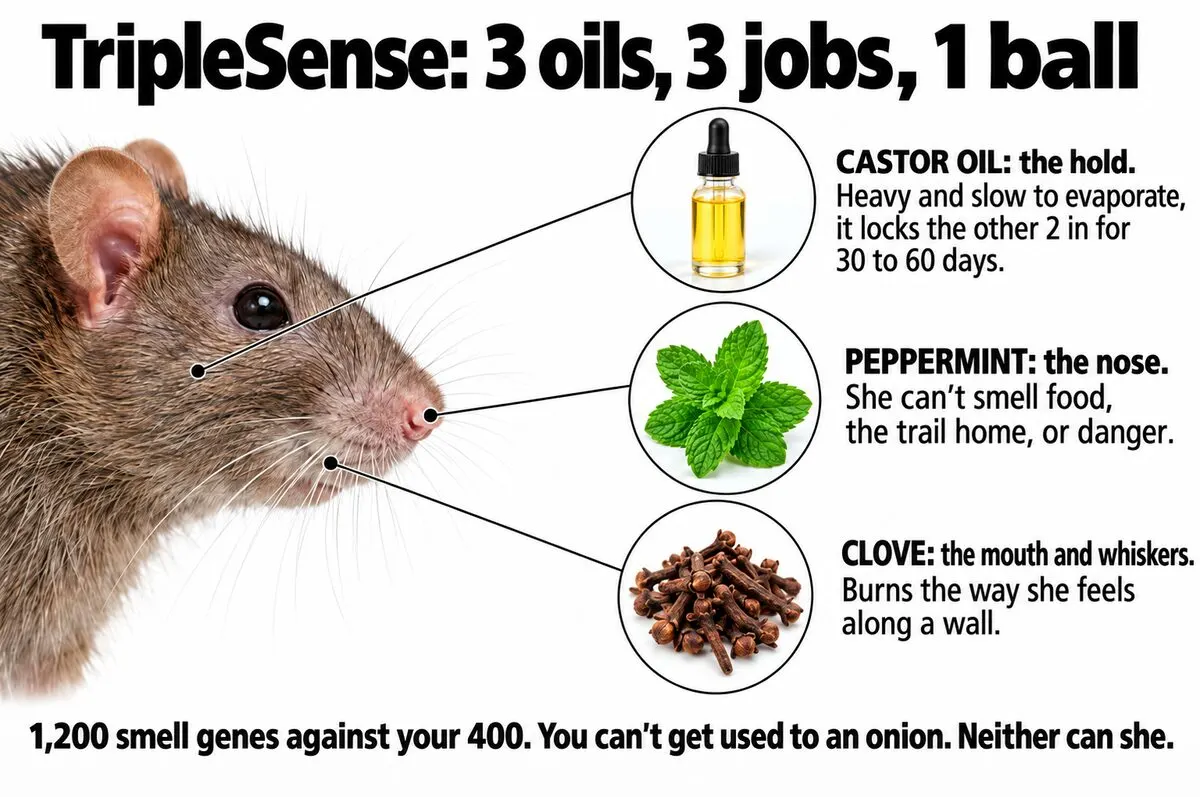
We are the MintGuard team and make the product featured on this site. MintGuard uses peppermint oil, clove oil and castor oil in 12 slow-release solid balls per pack. Each ball lasts 30 to 60 days. It contains no poison, uses no traps and needs no socket, but we cannot promise it clears an infestation.
Proofing checklist
- Keep bird seed and animal feed in sound, closed containers. Clear spills rather than masking them with another smell.
- Check door bottoms, damaged vents and service penetrations. Preserve required airflow and obtain specialist advice for drain or structural defects.
| Suggestion | Useful role | Why not rely on it |
|---|---|---|
| Peppermint or clove product | Optional labelled scent measure | Mixed evidence; must stay fresh and inaccessible |
| Vinegar | Ordinary household use as appropriate | Not a dependable rat barrier |
| Bleach or ammonia | Labelled cleaning only | Fumes and mixing hazards; not a repellent plan |
| Predator waste or mothballs | Not recommended for this purpose | Hygiene or chemical-use concerns |
| Proofing and inspection | Addresses resources and access | Cost depends on the repair or local quote |
Mistakes to avoid
- Do not treat every smell suggested online as a safe ingredient. Household chemicals, essential oils and animal waste have very different hazards.
- Do not block a hole immediately without considering animals already inside and the possibility of protected wildlife. Arrange identification and safe control first.
When to call a professional
- Arrange help for burrows next to the house, repeated indoor activity, possible drain entry or damage you cannot inspect safely. Ask what investigation and follow-up the quote includes.
- Use GOV.UK guidance to find a pest controller or check council services. Do not improvise traps or poisons when unsure how to protect pets and other wildlife.
Prefer a scent product without loose oil?
If your access and food checks are underway, consider MintGuard only as an optional extra. Packs cost £39, £69 for two, £89 for three or £109 for four. The official shop is mintguard.co.uk, with a 90-day money-back guarantee, tracked UK delivery and secure Shopify checkout.
From £27.25 a pack · 90-day money-back · Tracked UK delivery
Try it risk-free for 90 days
If MintGuard doesn't help, the official shop refunds you. You get tracked UK delivery and secure Shopify checkout. How to check you're buying the real thing.
Common questions
What smell do rats hate the most?
There is no dependable household ranking. Peppermint and clove are marketed for deterrence, but noticing an odour does not establish that rats will abandon food or shelter. Repairs and resource removal are more useful priorities.
Does vinegar keep rats away?
We would not rely on vinegar to stop access. Even a noticeable smell does not close an entry point. Spend the effort on secure bins, feed storage and an inspection of repeated routes.
Does bleach repel rats?
Do not use bleach as a rat repellent. Keep it for the cleaning uses on its label. Never mix it with ammonia or other cleaners, and do not leave open containers as scent barriers.
Do rats hate the smell of cats?
A predator-related smell is not a reliable household exclusion method. Do not use dirty litter around food stores or expect a resident cat to solve building defects. Protect the cat from contact with rats and unsafe treatments.
Will mint plants stop rats in my garden?
A plant is not a rodent-proof fence. It does not secure compost, spilled seed or an open shed. Keep the planting if you enjoy it, but tackle the attractants and access separately.
What repels rats naturally without harming pets?
Begin with food management and suitable proofing. Natural scent products still need exposure precautions, and essential oils can harm pets. Ask a vet about any product used near an animal rather than assuming it is harmless.